Why a Street Corner Can Feel Like a Natural Pause
Why a street corner feels like a natural pause: read sightlines, crossings, and route junctions to choose a comfortable spot to stop and reorient.
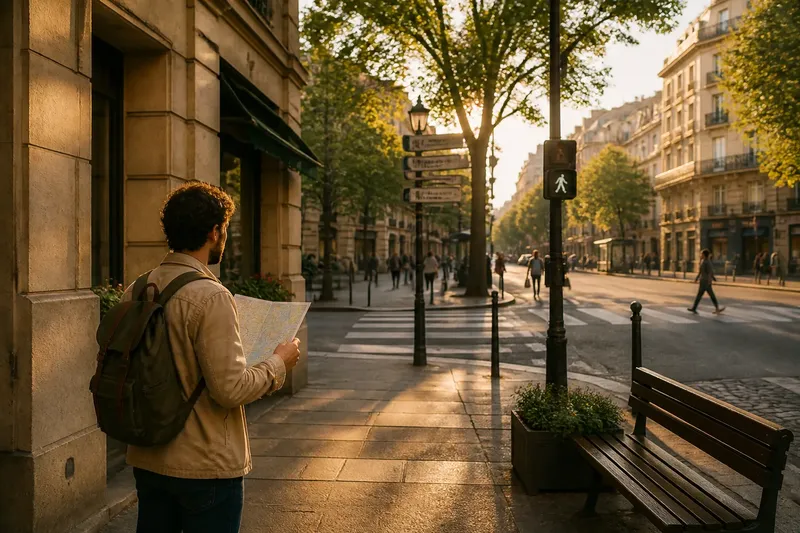
The common mistake on a city walk is stopping wherever the view first catches your eye. That can leave you blocking a doorway, standing in a stream of pedestrians, or trying to read a map while watching traffic. A street corner can feel like a natural pause because it often brings routes, views, and crossing decisions together—but the best place to stop depends on what the corner is doing around you.
Read the corner before choosing where to stand
A corner is more than the point where two sidewalks meet. It is a small change in the street’s layout: one view opens while another disappears, people arrive from different directions, and someone may be waiting to cross. Those shifts give a walker a reason to slow down and take stock.
Look for a spot just outside the main flow. A setback beside a building, a wide stretch of sidewalk, or a bench set back from the curb may offer room to pause without making others weave around you. Avoid standing across a shop entrance, curb ramp, bus stop boarding area, or the narrow part of a walkway.
Then check the sightlines. Can you see the next block, the street signs, and the crossing you need? A corner with a view down both streets can help you understand your options. A corner boxed in by construction fencing or parked vehicles may be a poor place to orient, even if it seems quiet.
Choose by what your walk needs right now
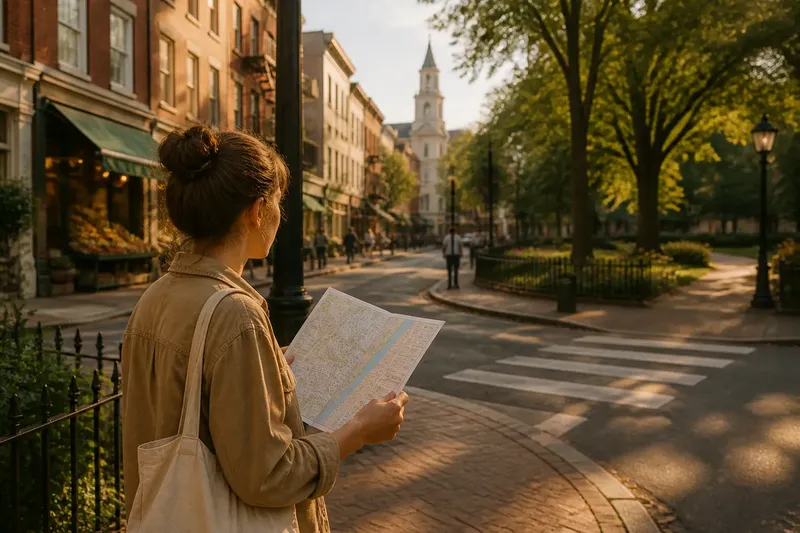
If you are unsure which street continues your route, choose a corner where both directions are visible and street-name signs are easy to read. Stand back from the curb, check the names, then match them to your map. This works well when the route is unclear but there is no urgent need to cross immediately.
If you need to cross, pause near the crossing point but outside the curb ramp and the path of people approaching it. Use the marked crossing and signals where available, and take in traffic from the position where you can wait safely. The corner is useful here because it lets you assess the crossing and the route beyond it together.
If several streets or paths meet, give yourself a little room before deciding. A junction can offer several plausible directions, and the busiest-looking street is not necessarily the one you need. Check your map against street signs and the shape of the next block rather than choosing while already stepping into a crossing.
If you need a moment to rest or adjust your bag, look for a bench, a broad building frontage, or a small public-space edge nearby. A curb corner is not automatically a comfortable resting place: noise, turning traffic, and the steady stream of walkers can make it tiring. A few steps away may provide a calmer pause while keeping the junction in view.
If the corner is crowded or visually confusing, keep walking until the sidewalk widens or the foot traffic thins. The useful pause is the one that lets you think without obstructing others or losing track of your surroundings; it does not have to happen exactly at the intersection.
Why crossings and sightlines change the feel
Crossings give a corner a natural rhythm. People approach, wait, cross, and disperse, creating a short interval in which a walker can reconsider direction. That interval can be handy, but it also means the corner’s busiest zone is often the least considerate place to stop.
Sightlines matter for a different reason. Looking along a street can reveal whether it continues straight, bends, narrows, or leads toward the next part of your route. The view is information, not a promise that the street is passable or that your destination lies ahead. Construction, private entrances, and pedestrian-only routes can change what a glance suggests.
Route junctions add another layer. A corner where a side street, plaza entrance, or pedestrian path joins the sidewalk can feel like a decision point even when no formal sign marks it. Notice where people naturally turn, but treat that movement as a clue rather than a direction to follow.
How can you tell whether this is a good place to pause?
Where should you stand at a busy corner?
Move away from the curb ramp, doorway, and the center of the sidewalk’s walking line. A recessed frontage or wider section nearby can keep you out of the way while leaving the street signs and crossing visible.
What if the street signs are hard to see?
Shift to a place with a clearer view rather than stepping closer to moving traffic. If signs remain obscured, check your map from a safe position and compare the visible street layout with the map before choosing a direction.
Is a corner better than stopping mid-block?
It can be, especially when you need to compare streets or prepare for a crossing. But a quiet, wide stretch mid-block may be more comfortable if the intersection is crowded or the corner is too narrow.
When should you keep walking instead?
Move on if you would obstruct a crossing, have to stand in a bike lane or doorway, or cannot see enough to make a useful decision. Look for a more open spot within view of the junction and pause there instead.
Use one quick scan to make the decision
Say you reach a busy corner and your map shows a turn, but the street signs are partly hidden by a tree. Imagine stepping back to a wide section beside a building, checking the visible crosswalk and reading the sign from there. You can compare the street name with the map without occupying the curb ramp; if the view still does not settle the choice, you can continue to a clearer block face before turning.
Before stopping, make a short scan:
- Foot traffic: Is there room to stand without narrowing the sidewalk? If not, move along.
- Crossing space: Are you clear of the curb ramp and waiting area? If not, step aside.
- View: Can you see the signs or the next stretch of route? If not, find a clearer angle.
- Nearby comfort: Is there a bench or sheltered frontage away from the traffic flow? Use it if you need a longer pause.
- Route choice: Do the street signs and map point to the same turn? If not, wait until you can check without rushing.
A street corner feels like a natural pause when it offers a clear view and a sensible place to stand, not simply because two streets meet. Read the sightlines, notice where people need to cross, and choose the nearest spot that leaves the sidewalk usable. That small adjustment can turn a confusing junction into a calm moment to reorient and keep walking.