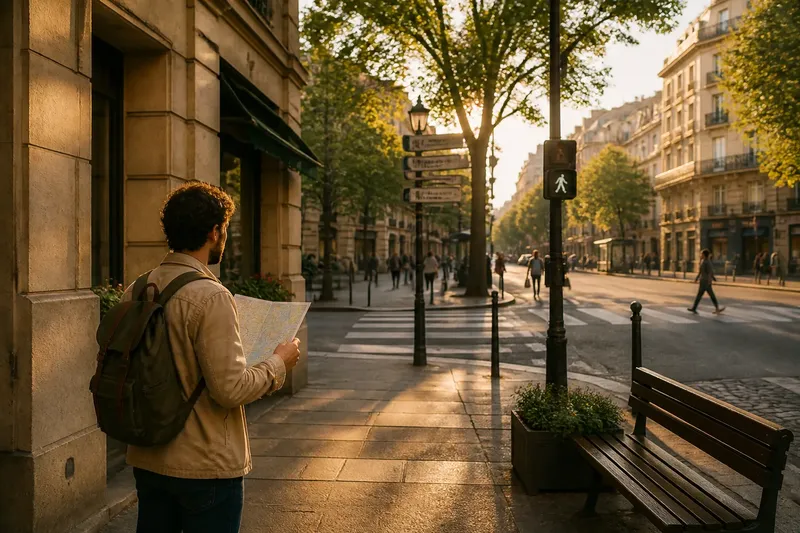
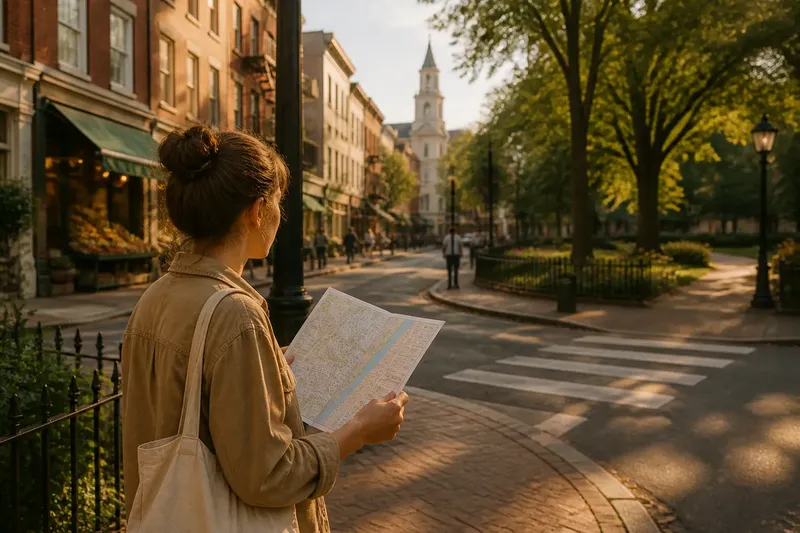
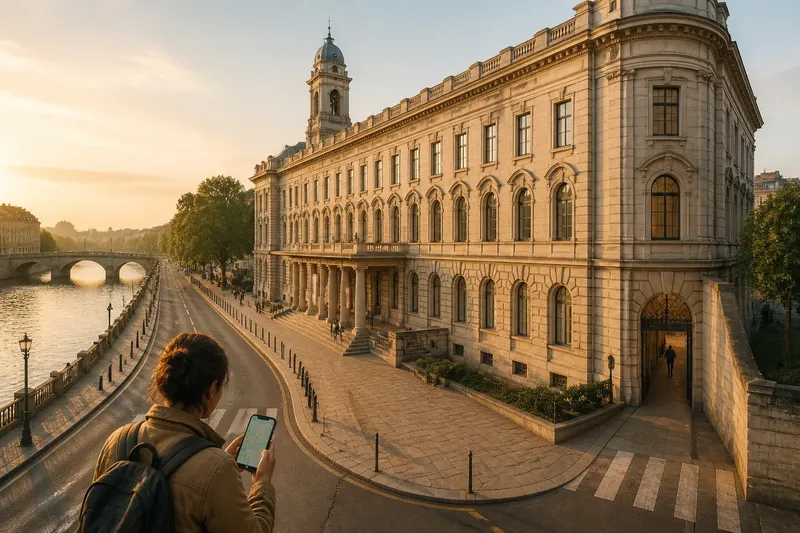
The Public Square Before the Traffic Circle
Explore the public square before the traffic circle and learn to read how markets, civic buildings, crossings, and seating shape a place on foot.
The common mistake is to treat a public square as leftover space between streets, a broad patch to cross on the way somewhere else. The public square before the traffic circle is a useful way to read how some urban centers changed, but city histories differ: squares, streets, and vehicle routes often developed alongside one another. Start with what the space lets people do now, then look for the older civic patterns in its edges and paths.
Shared ground takes shape around daily life
A square is not simply an empty shape on a map. It is an open portion of a city where people can occupy space together. Its edges might be formed by homes, shops, a market hall, a place of worship, or public offices. Its center could be bare, planted, paved, or marked by a fountain or monument.
That shared character distinguishes a square from a private courtyard, even if both are enclosed and calm. It also distinguishes a square from a street, which mainly connects one place to another. A square can contain routes, but it also invites people to stop, gather, watch, trade, celebrate, or take a place among others.
There was never one universal model. A European market square, a South Asian chowk, and a Latin American plaza developed within different customs and forms of government. They should not be flattened into a single origin story. In many settings, though, open ground, surrounding activity, and a public role came together in recognizable ways.
Markets brought everyday encounters into the open
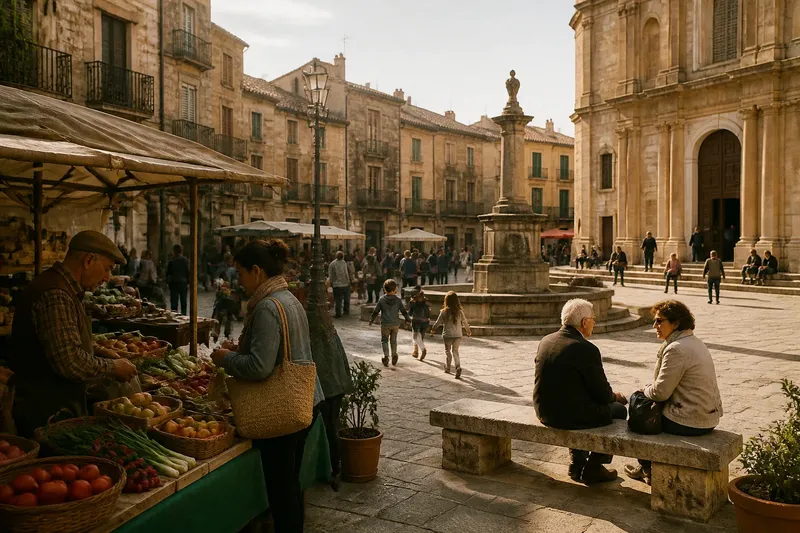
In many cities, a square was woven into ordinary errands. Sellers arranged goods in the open; neighbors met while buying provisions; visitors learned where activity was concentrated. The marketplace made the space useful to people with no formal role in civic affairs. Someone might arrive for food, exchange news, and stay to watch what was happening.
Markets also gave a square a changing rhythm. Stalls and crowds might occupy the ground at certain times, then clear away for other uses. A covered arcade could offer shelter, a shop could open directly onto the square, and an upper window could provide a view without requiring someone to join the crowd.
Imagine a fictional town where a produce seller sets up near the center on market morning. A neighbor buys apples, then sits on a low wall while waiting for a friend. After the seller packs up, the open ground is available for children crossing between homes and for a small public gathering later. The expected result is a place whose usefulness changes with its users and the hour.
Open space made room for public presence
Beyond commerce, a square offered urban openness. Narrow streets could funnel movement; a square widened the view and gave people room to assemble. It might host a procession, performance, public announcement, celebration, or demonstration. It could also offer a pause from closely built surroundings without requiring a special occasion.
Open ground is not automatically welcoming. A broad paved area with no shade or comfortable place to pause may be easy to see but difficult to use. Trees, benches, drinking water, and sheltered edges can support lingering. The arrangement shapes who can comfortably stay and where. A broad center may suit a gathering, while its edges give individuals a place to watch or rest.
A civic space has to make room both for collective presence and for people who arrive alone, move slowly, or do not want to stand at the center of attention. Notice whether seats face one another, whether someone can sit without buying something, and whether walking routes cut through groups or allow them to gather undisturbed.
Buildings along the edges framed civic life
Squares often stood beside institutions associated with local authority or shared identity. A council building, courthouse, religious structure, or civic hall could give the open ground a formal address. Entrances, steps, and façades made the square a setting where public life could be seen. The relationship worked both ways: a prominent institution lent significance to the space, while the crowd made its public role tangible.
That visibility could feel welcoming or controlling. Residents might gather and speak, while the same open layout could display authority or make a crowd easier to observe. A monument can focus attention; a raised platform can give a speaker a voice; an open approach can frame a ceremonial entrance. None of these features dictates how people will use the square, but each can influence what feels prominent.
Look from the edges as well as the center. Notice which doors open onto the space, where people pause, and whether buildings present active entrances or mostly blank walls. A square’s meaning is not contained in its paving. It develops through the relationship among people, nearby buildings, and visible activities.
How do squares and traffic circles differ?
What is the difference between a square and a traffic circle?
A square is primarily a shared place where people can gather and stay. A traffic circle organizes vehicle movement around a central island, which may be planted or decorated but can be difficult to reach on foot. Some places combine the forms, so look for pedestrian access and actual patterns of use rather than relying on the name.
Why did traffic become more prominent in some squares?
As vehicle travel became a major part of urban movement in particular places and periods, streets and junctions were sometimes arranged to keep traffic flowing. A square at the meeting point of routes could then be treated more as something to pass around than a destination to enter. The timing and extent varied by city; there was no single sequence that fits every urban history.
Can a traffic circle still serve as a public place?
It can if people can reach and use it comfortably. A planted island surrounded by busy roads may contribute to the view without functioning as an accessible gathering place. Crossings, pedestrian paths, seating, and connections to nearby destinations can help a traffic-centered site support uses beyond circulation.
What should a walker notice in an old square?
Watch where movement gives way to staying: where paving changes, where benches face, and where pedestrians are expected to cross. Then notice who uses the space and which activities appear to fit naturally. These clues help distinguish a square that remains part of civic life from one whose public role is mostly symbolic.
Traffic reshaped some centers in different ways
In some cities, street widening or vehicle routes through older centers reduced the room available for gathering. Other squares were divided by traffic lanes, bordered by parking, or converted into roundabouts. A central island might preserve a fountain or monument while making the surrounding space harder to enter. From a passing car, the feature could remain visible; on foot, the same place might feel cut off.
That was not a simple replacement of squares by circles. Many cities kept traditional squares while adapting nearby streets, and some traffic circles later gained pedestrian access or public programming. The outline alone does not tell you what a place is for. Ask whether people can approach it, occupy it, and use it without having to behave like traffic.
Changes can also be subtle. A curb may steer walkers toward one crossing. Café tables may enliven one edge while narrowing the path for others. A monument may remain in place while a customary gathering shifts to a shaded side street. On foot, these details show how a public space’s use can be negotiated over time.
What should you look for while reading a square?
- Observe whether the main entrances are open and active; if people can enter directly, follow one and note where it leads, but if an edge is blank or closed, approach from another public route.
- Observe whether the center is occupied by traffic or open to pedestrians; if walkers can cross safely and pause, explore the center, but if vehicle movement dominates, stay on the accessible perimeter.
- Observe whether benches or low walls offer places to sit; if seating is available without requiring a purchase, use it to watch the square, but if not, look for a public edge or nearby shaded place.
- Observe whether shade or shelter is available; if it is, choose that edge for a longer pause, but if it is not, keep the visit brief and use a nearby sheltered public area.
- Observe whether crossings connect the square to surrounding streets; if they are direct and accessible, use them to compare the approaches, but if they are difficult to reach, choose a marked crossing and avoid crossing through moving traffic.
- Observe whether market stalls, café tables, or events narrow a walking route; if a clear path remains, continue along it, but if it is blocked, use another open route rather than pushing through the activity.
Say you arrive at a fictional square with a fountain in the middle, a row of shops on one side, and a road separating the fountain from the nearest sidewalk. You notice a marked crossing at the far corner, benches beneath trees beside the shops, and a clear walking route around the edge. First, you take the marked crossing rather than stepping into the road. Next, you follow the open perimeter to the benches and pause there to watch how people enter. The resulting decision is to treat the fountain as a visible landmark, not an accessible gathering point, and to use the shopfront edge as the square’s practical public space. If the crossing were closed, the alternative would be to stay on the sidewalk and view the center from a safe public approach.
The square remains legible through its paths and pauses
To read an urban square, give yourself time to see it from more than one position. Enter from an ordinary street rather than approaching only by the most ceremonial route. Notice whether the center is open or occupied, whether the edges offer shelter, and whether people cross through or choose to stay. A bench under a tree, a market stall at the edge, or a doorway where neighbors stop to talk can reveal more than a monument alone.
Then consider the surrounding routes. Does traffic pass around the space, through it, or close enough to interrupt conversation? Are crossings direct? Can a wheelchair user reach the same central area as other visitors? These practical questions connect a place’s history as shared ground to the experience of using it now. For current accessibility or safety concerns, follow posted guidance and consult the relevant local authority.
The public square before the traffic circle is not a universal past or a perfect civic ideal. Access could be restricted, authority could dominate, and daily uses could compete. Its useful lesson is more specific: an open patch becomes part of public life when people can arrive, remain, and take part in what happens around them. When you stand in a square, look beyond its center and notice whether the city has left a comfortable, accessible place for someone to stay.