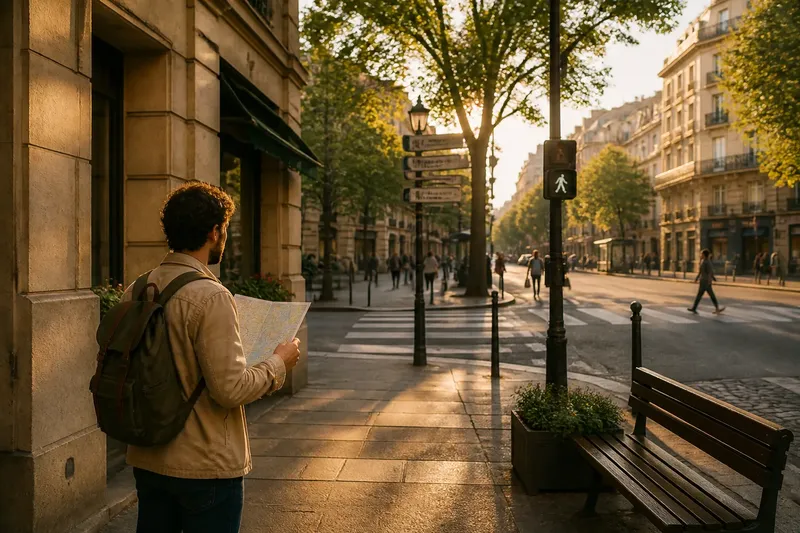
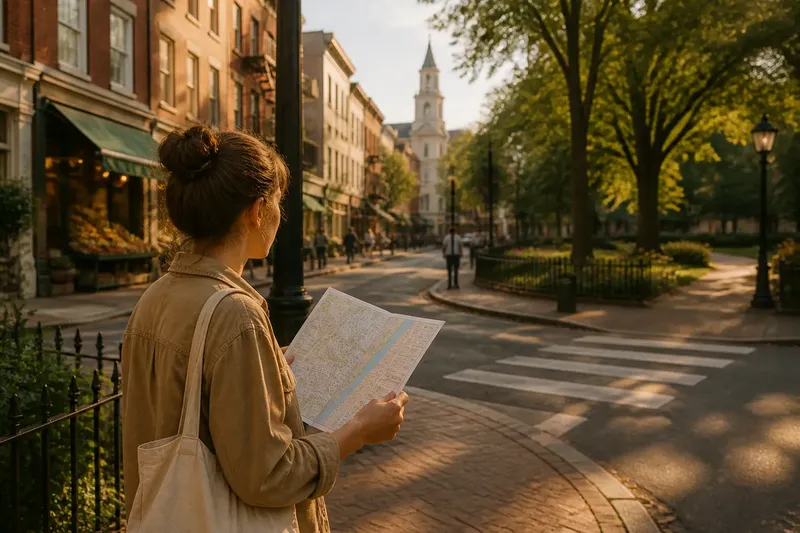
A Rainy City Walk with One Indoor Pause
Plan a rainy city walk around one welcoming indoor pause, so you can enjoy the streets, adjust to changing weather, and head home without rushing.
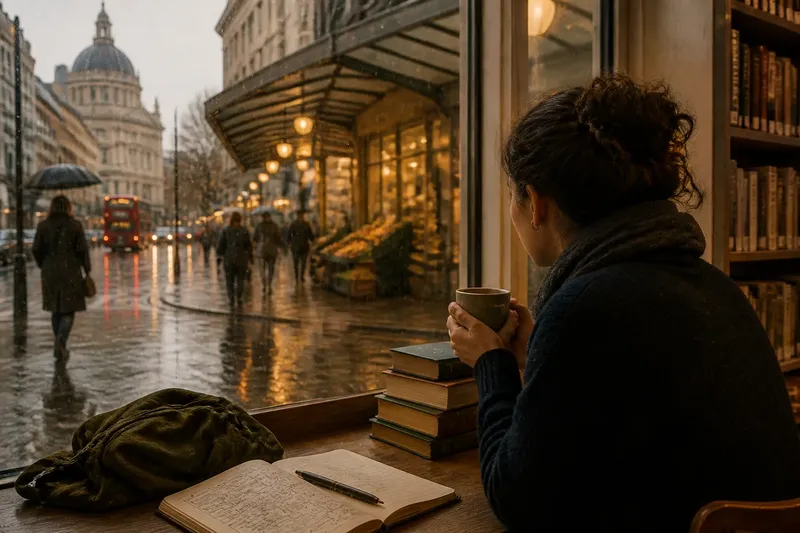
The usual mistake on a rainy city walk is treating the forecast as a promise and every turn as fixed. The cost is a damp, hurried march between destinations. Choose one indoor pause as your anchor, then let the streets before and after it respond to the weather.
A public library, covered market, small museum, conservatory, or welcoming café can offer a place to dry off and reassess. The point is not to fill the walk with indoor stops. One well-chosen pause gives you room to change your mind.
Choose an indoor pause that suits the walk
Pick a place you would actually enjoy spending time in, then consider how it fits the neighborhood. A library may offer a quiet seat; a market brings movement and food; a museum asks for more attention. Check opening hours, entry rules, seating, and whether visitors can comfortably come in wearing wet coats.
The approach matters, too. An entrance beside an arcade or covered passage may be easier to reach than one facing a broad, exposed plaza. Note a nearby sheltered bus stop or awning as a fallback, not another destination to squeeze into the outing.
Shape a rainy city walk around one anchor
Choose an easy starting point, such as a transit station, and save the indoor stop’s address. Use a map app to spot appealing blocks and a practical way back. If checking your phone in the rain is inconvenient, download an offline map before leaving.
Give yourself two ways to reach the pause: perhaps a street with shopfronts and arcades, and a more exposed garden path for calmer weather. These are options, not obligations. If one stretch feels uncomfortable, choose the sensible crossing toward shelter rather than forcing the planned line.
Say you start at a station and choose a library a few blocks away. You save its address, note a covered shopping street as the sheltered approach, and mark a garden path as optional. If the rain stays light, you take the garden path; if it gets heavier, you stay under the arcade and reach the library without making the detour a requirement.
Dress for changing weather and wet sidewalks
Wear shoes that fit securely and feel steady on wet pavement. A hooded jacket keeps your hands free, while a compact umbrella can help on open streets but feel cumbersome on narrow, crowded sidewalks. Choose based on the route and the wind, not just the rain.
A light outer layer is easier to manage once you are inside. A dry cloth, a sealable pouch for your phone, and spare socks can help if you get soaked. Keep loose items to a minimum so you can manage your belongings without losing attention to the sidewalk.
Wet surfaces deserve care. Painted road markings, smooth stone, metal plates, and fallen leaves may be slippery. Use marked crossings, give turning traffic room, and avoid stepping into puddles when you cannot see their depth. If a crowded sidewalk leaves no comfortable space near the curb, wait for a gap.
Let the first stretch set the pace
Start on an ordinary block rather than the most exposed part of the route. Notice whether water pools near curb ramps, how much cover shopfronts offer, and whether the rain is blowing sideways. Those details can tell you more about the walk’s comfort than the map alone.
Rain also changes the street’s rhythm. People gather under awnings, outdoor tables empty, and familiar blocks can feel quieter. A bakery window or a sheltered doorway may add a small moment of interest without turning into another planned stop.
Use the indoor pause to make a fresh decision
Once inside, take off your wet layer and settle before deciding what comes next. Check a weather app if useful, but also look outside. Wind pushing rain across the sidewalk or a shower easing to a drizzle can help you choose an appropriate next stretch.
Continue for a shorter walk, wait and reassess, or head toward nearby transit. You can decide after sitting down for a while rather than at the entrance. Follow the venue’s seating rules, especially if it is busy, and leave room for people who came for another reason.
Keep the pause singular so the outing does not turn into a race between doorways. If a shop or gallery catches your eye, add it only if you still have the time and energy; otherwise, enjoy the discovery from the street and keep your plan simple.
Choose the return by comfort, not symmetry
You do not need to retrace your steps. Look for a nearby transit entrance, a more sheltered street, or a lively block with awnings. If the weather has eased, a park may make a pleasant return; if it has worsened, the shorter way back is a good adjustment.
Check where the transit entrance sits in relation to the street. A stop across a busy road may mean an exposed crossing, while one on your side may make the final stretch easier. Use a local transit app or posted notices to check for service changes before choosing.
What should you decide before heading out?
How long should a rainy city walk be?
Leave room for the indoor pause and a simple return instead of filling the day with fixed stops. If you feel cold or the weather worsens, shorten the outdoor part.
What makes a good indoor stop?
Choose a place that welcomes visitors, gives you a comfortable reason to stay, and is near a practical way onward or home. Check its hours and entry expectations before you set out.
Should you bring an umbrella or a rain jacket?
A hooded jacket keeps both hands free, while an umbrella may suit open streets and gentler rain. Consider wind and sidewalk crowding when choosing.
What if the rain gets heavier before you reach the stop?
Head toward the nearest safe shelter or transit option rather than pressing on to your chosen venue. The indoor pause is an anchor, not a deadline.
A rainy city walk works best when one indoor pause gives you a choice rather than a deadline. Save the venue address and a nearby transit option before leaving; then you can enjoy the streets that feel comfortable and change course without needing the day to follow a perfect line.